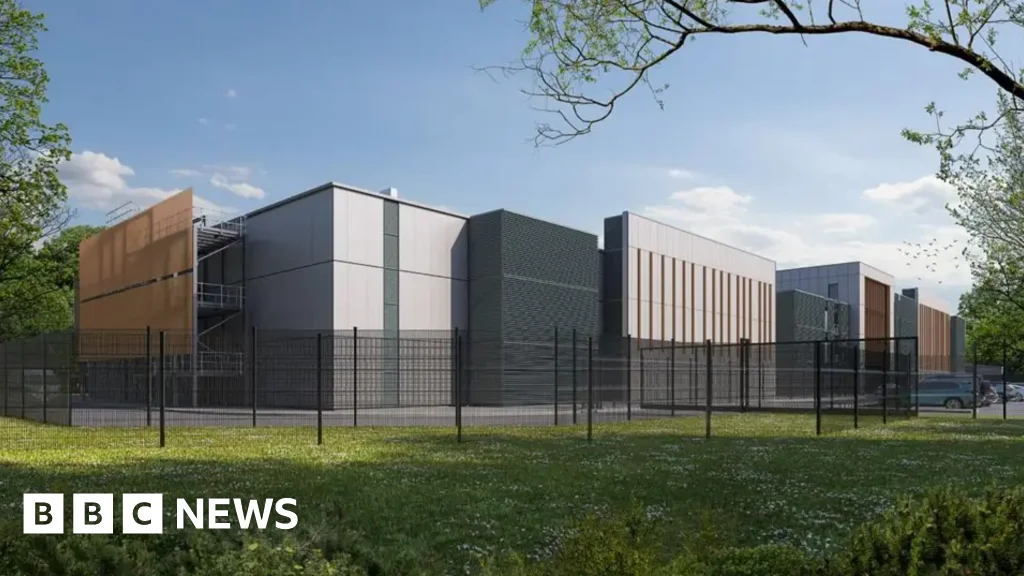
Plans for a major data centre development in Corsham have been approved despite facing over 1,100 objections from local residents and groups. The facility, representing a £250 million investment, will become one of the region's largest technology infrastructure projects, though concerns about noise, scale, and environmental impact dominated the public consultation process.
Scale and Specifications of the Development
The approved data centre will be a substantial undertaking in terms of physical footprint. The building will reach 18.7 metres at its highest point and stretch approximately 180 metres in length, making it a prominent landmark in the Corsham area. Such dimensions are typical for modern hyperscale data centres, which require extensive space to house thousands of servers and associated cooling infrastructure.
Data centres of this scale serve as critical nodes in digital infrastructure, supporting everything from cloud computing services to streaming platforms and enterprise applications. The facility's investment value reflects the growing demand for data processing capacity across the UK and Europe.
Community Concerns and Opposition
The planning application generated substantial local resistance, with more than 1,100 objections submitted to the local council. The primary concern cited by objectors was noise pollution from the facility's cooling systems. Data centres generate considerable heat and require sophisticated cooling mechanisms to maintain optimal operating temperatures for sensitive equipment. Cooling fans, which run continuously to manage thermal loads, can produce noise levels that carry considerable distances, particularly during evening and night hours.
The building's physical dimensions also provoked significant concern among residents. The 180-metre length and nearly 19-metre height represent a substantial structure that fundamentally alters the visual landscape of the area. Local communities expressed worry about the aesthetic impact and whether such industrial-scale infrastructure was appropriate for the Corsham locality.
Beyond noise and appearance, residents raised questions about broader environmental and infrastructural impacts. Data centres consume enormous quantities of electricity and water, raising questions about resource management and environmental sustainability. The concentration of such facilities can also strain local utilities and transport networks.
The UK Data Centre Boom
The approval of the Corsham facility reflects broader trends in the UK technology sector. Data centre capacity has become increasingly critical as digital services expand across every sector of the economy. Cloud computing, artificial intelligence, video streaming, and enterprise software all depend on robust, geographically distributed data centre infrastructure.
The UK has positioned itself as a major hub for European data centre development, competing with countries like Germany, the Netherlands, and France for investment. London and the South East have been particularly attractive to data centre operators seeking proximity to major financial centres and dense population areas. Developments in towns like Corsham, which offer more space and lower land costs than major urban centres, represent the natural expansion of this infrastructure beyond traditional technology hotspots.
Planning authorities across the country have increasingly grappled with balancing the economic and strategic benefits of data centre development against legitimate community concerns about environmental impact and quality of life.
Planning and Future Implementation
The approval of the Corsham data centre suggests that the local planning authority determined the strategic importance of the project outweighed the community objections. Such decisions typically involve careful assessment of national planning policy, which increasingly emphasises the importance of digital infrastructure to economic competitiveness and public services.
The next phase will involve detailed design and construction planning. Operators will need to address noise mitigation measures, which typically include acoustic engineering, strategic placement of cooling systems, and operational protocols to minimise disturbance. Many modern data centres incorporate sophisticated sound dampening technologies and manage fan speeds to reduce noise during sensitive hours.
Local communities will likely continue to monitor the project's implementation, particularly regarding compliance with any conditions imposed by the planning approval. Ongoing dialogue between the operator and residents may address some concerns through revised operational practices or additional mitigation measures.
Broader Implications for Regional Development
The Corsham approval demonstrates how technology infrastructure is reshaping regional geography across Britain. Smaller towns and rural areas are increasingly hosting facilities that were once concentrated in major cities. This distribution reflects both the technical requirements of modern data centres—which need reliable power and cooling—and the economic logic of spreading investment beyond expensive metropolitan areas.
For Corsham and the surrounding region, the data centre represents significant economic activity, including construction employment and ongoing operational jobs. However, the substantial community opposition indicates that residents weigh these economic benefits against quality-of-life considerations.
Related Articles
- Corsham's Commercial Landscape Shifts as Retirement Village and Hospitality Sector Invest in Local Growth
- Ancient North Sea asteroid impact could reshape understanding of geological risk and insurance liability
- Primark to close nearly 190 stores across UK for Easter Sunday under trading restrictions
The approval of the £250 million data centre in Corsham marks a significant moment for the town's technological infrastructure, even as it reflects ongoing tensions between economic development and community concerns. The facility will contribute to the UK's digital capacity at a time when such infrastructure is increasingly essential. However, the scale of opposition—with over 1,100 objections—underscores the need for operators and planners to engage seriously with community concerns around noise, environmental impact, and landscape change. As data centre development continues across Britain, the Corsham case will likely inform how future projects navigate the balance between national infrastructure needs and local quality of life.