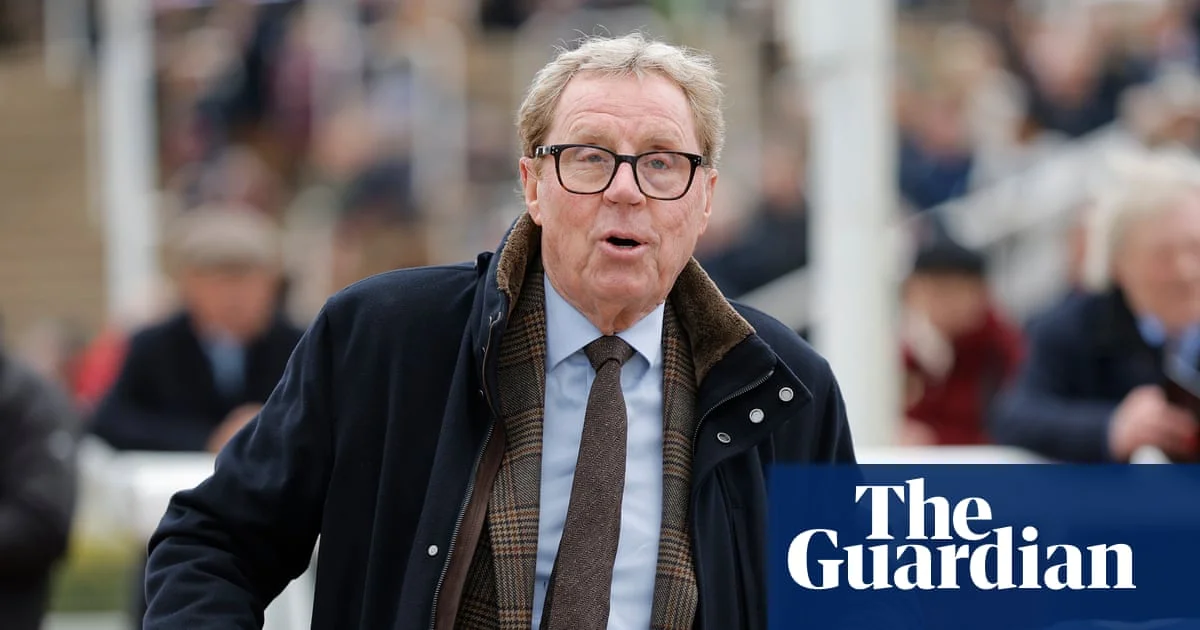
The Cheltenham Gold Cup has long been steeplechasing's most prestigious championship, a race that has launched legendary horses into household-name status and captivated the sporting public for generations. This year's running presents an unusual opportunity: a former football manager with genuine celebrity status is attempting to claim the sport's greatest prize, offering the racing industry a potential marketing windfall at a critical moment when attendance figures have been sliding sharply.
A Veteran Owner's Long Journey
Harry Redknapp's involvement with horse racing extends back decades, though meaningful success has proved elusive until relatively recently. His first horse to carry his colours was a filly named Slick Cherry during his time managing Bournemouth, and since then he has owned dozens of runners across both the flat and jumping disciplines. Among his more notable achievements on the Flat was Moviesta, a Group Two winner at Glorious Goodwood in 2013, yet significant progress over the jumps only materialised after he began sending horses to trainer Ben Pauling's stable near Naunton, approximately 30 miles from Cheltenham.
This partnership has yielded tangible results. Shakem Up'Arry, named after the persistent encouragement from a West Ham supporter, provided Redknapp with his first festival success in the Plate Handicap Chase two years ago, breaking a pattern of disappointment that had lasted decades. However, the volatility of Cheltenham racing was immediately apparent when The Jukebox Man, his second runner at the same festival, was caught in the final strides of the Albert Bartlett Novices' Hurdle after leading by four lengths over the final obstacle.
Building Credentials for the Championship
The Jukebox Man's subsequent career trajectory has been considerably more encouraging. The horse secured a narrow victory in the King George VI Chase at Kempton Park, a race with an impeccable pedigree of producing Gold Cup winners. The historical roll of honour includes Arkle, Desert Orchid, and Kauto Star—horses whose achievements transcended racing to achieve genuine cultural prominence. Success at Kempton has long been regarded as a meaningful pointer towards Gold Cup suitability, and The Jukebox Man's victory there has generated substantial market support.
The race itself represents steeplechasing's championship event, contested over three miles and two and a half furlongs at Cheltenham. This year's renewal features a 11-strong field, with multiple contenders capable of justifying selection. The field includes Gaelic Warrior, trained by Willie Mullins and heavily backed in the days preceding the race, though there are concerns about his tendency to over-race on softer ground. Jango Baie has compiled an impressive record since winning the Arkle Chase last year and has demonstrated sufficient stamina for the extended distance.
The Unique Marketing Opportunity
What distinguishes this year's Gold Cup from a commercial perspective is the profile of The Jukebox Man's owner. Redknapp's background as a football manager at West Ham, Tottenham, Bournemouth, and Portsmouth has established him as a recognisable figure within sporting circles. His subsequent television career has elevated his public profile considerably beyond traditional racing audiences. A Gold Cup victory would represent not merely a triumph for the horse and trainer, but a significant cultural narrative that could extend racing's appeal into demographics typically disengaged from the sport.
The timing is particularly significant given Cheltenham's recent commercial challenges. The festival has experienced a pronounced three-year decline in attendance figures, a trend that has concerned stakeholders across the racing industry. A Gold Cup victory for a horse owned by a high-profile personality could provide the festival with a compelling storyline capable of attracting media attention beyond specialist racing coverage. The horses themselves may be the primary athletes, but they cannot generate the interviews and media engagement that human personalities provide.
The Weight of Expectation
Redknapp himself has reflected upon the psychological pressures associated with running favourites at Cheltenham. Following the disappointing performance of No Drama This End, the favourite in Wednesday's Turfers Novices' Hurdle, Redknapp observed the emotional toll on the horse's owner, Max McNeill. Despite being the market favourite and carrying substantial expectations, the horse failed to perform, finishing well down the field. This outcome underscores the unpredictability inherent in jumping racing and the considerable variance between pre-race expectations and actual results.
The Jukebox Man enters the Gold Cup as one of the favourites, meaning similar expectations will surround his performance. Redknapp has maintained a measured approach despite the obvious appeal of a Gold Cup success, acknowledging both the possibility of victory and the genuine uncertainty that characterises racing at this level. His 35 years as an owner have provided ample experience of both triumph and disappointment, tempering any overconfidence.
A Field of Genuine Quality
The 2026 Gold Cup field presents multiple viable contenders, making prediction hazardous. Inothewayurthinkin, the reigning champion, brings experience and proven form at the highest level. Haiti Couleurs possesses the stamina required for the three-mile-plus distance. Envoi Allen, trained by Henry de Bromhead, is reported to be in excellent form, with his trainer expressing considerable optimism about the horse's condition and prospects. De Bromhead noted that the horse was "buzzing" in the days before the race, and highlighted the significant representation from major ownership syndicates including Cheveley Park among the runners.
The ground conditions and specific running of the race will likely prove decisive, as they invariably do at Cheltenham. Some contenders may struggle on the softer going, whilst others could tire over the extended distance if the pace proves particularly demanding. The unpredictability is precisely what makes the Gold Cup compelling for racing enthusiasts and what makes a victory from this field a genuine achievement.
Related Articles
- Primark to close nearly 190 stores across UK for Easter Sunday under trading restrictions
- Television Expert Mel Schilling Steps Back from MAFS as Cancer Spreads to Brain
- Grand National 2026 shapes up as bumper year for racing tourism and hospitality sector
<p>The 2026 Cheltenham Gold Cup presents a fascinating intersection of sporting ambition and commercial opportunity. For Redknapp, it represents the culmination of 35 years of ownership involving considerably more disappointment than success. For the racing industry, a victory would provide a rare opportunity to extend the sport's reach beyond traditional audiences through the profile of the owner and the compelling narrative of a long-serving enthusiast finally claiming racing's greatest prize. Whether The Jukebox Man can deliver remains uncertain, but the race itself promises to be genuinely competitive, with multiple contenders capable of justifying their market support. The outcome will ultimately be determined by the quality of horsemanship, training, and the performance of the horses themselves—but the wider implications for racing's commercial prospects are difficult to overstate.</p>